
Choosing better.
Without stopping.
Replacing a core component on a machine that’s already working is never an easy decision. Here’s how a system-level approach made the difference.
Change one thing on a working machine, and everything connected follows — existing standards, interface dimensions, service part continuity. The real challenge isn’t finding a better part. It’s accepting that complexity and coming out the other side with a genuinely better system.
This is the story of a concrete pump truck boom swing drive — a real project, a real problem, and the engineering decisions that kept the customer’s equipment in service throughout the transition.
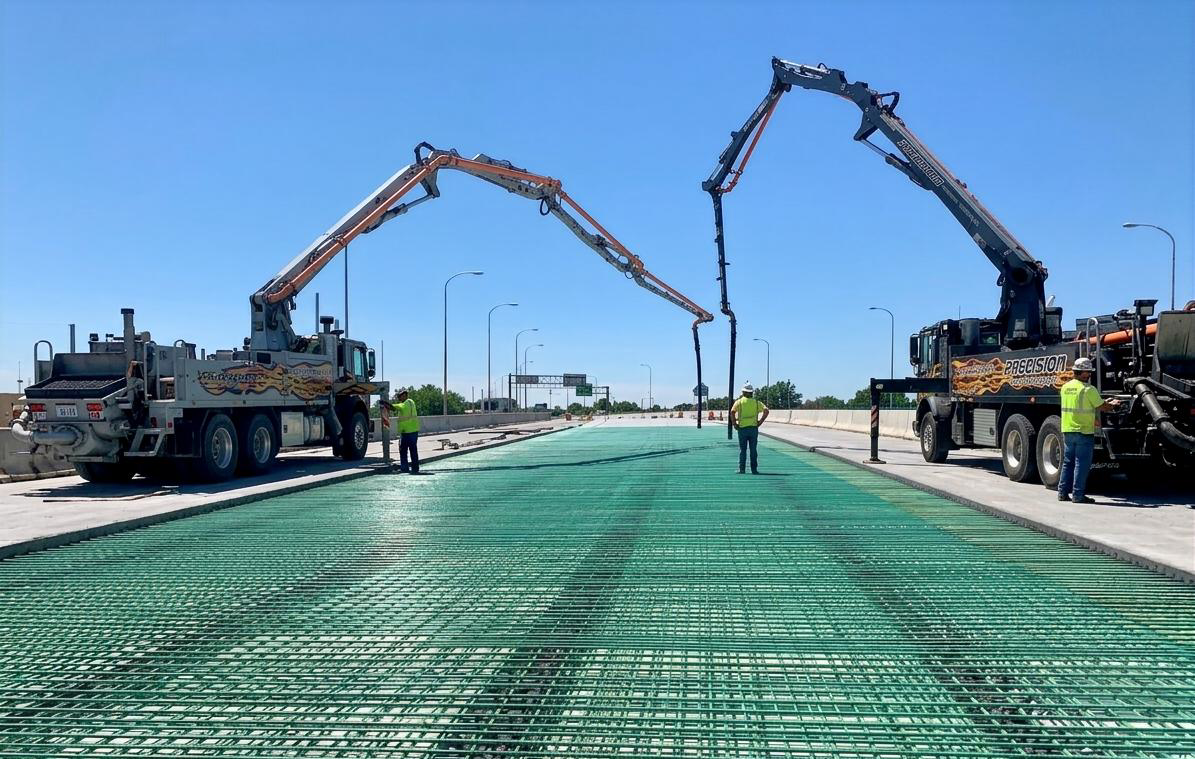
Not simple rotation — rotation under load
The boom rotation drive on a concrete pump truck is not simple rotary motion. The system must rotate under the full loaded weight of the boom — requiring high torque output with precise low-speed control.
The configuration that meets this demand is an orbital motor + planetary gearbox + pinion assembly, sharing a single lubrication circuit in series.
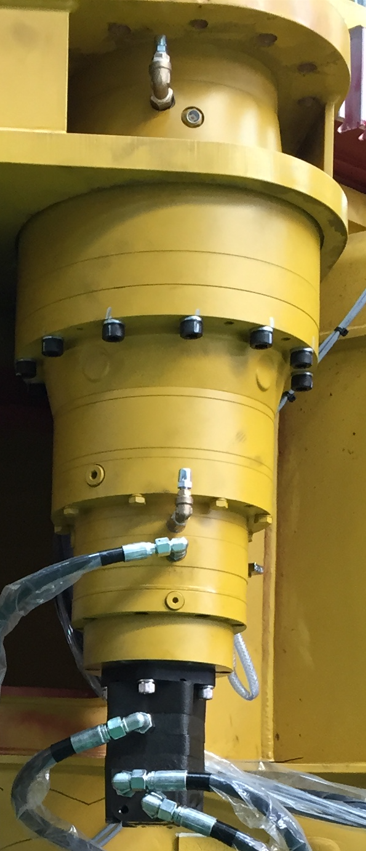
Converts hydraulic pressure into low-speed, high-torque rotation.
Multiplies torque at the required reduction ratio. The oil cup keeps the gear set lubricated under cyclic boom loads.
Meshes with the boom’s ring gear for final drive. Pipe connections complete the hydraulic return circuit.
Three components, one lubrication circuit — in series.
Specifying by boom size
The customer operates multiple boom sizes within a single product lineup — small, medium, and large. Each boom class carries different loads and demands different torque output, which means the gearbox and motor specs must be matched accordingly.
Two criteria drove the selection process.
Meet the spec for each boom class
Performance had to be met for small, medium, and large booms individually. A modest safety margin — slight overspec — was acceptable where it added reliability.
Minimize changes to connected parts
Even as the gearbox and motor were replaced, the goal was to retain as much existing pinion, shaft, oil cup, and pipe interface as possible. Every extra part changed adds installation risk and cost on the customer’s end.
The result was a matched ZI planetary gearbox + ZI orbital motor combination for each boom class. Pinions were specified separately to the customer’s exact requirements, with full quality inspection handled end-to-end.
Working across mixed standards
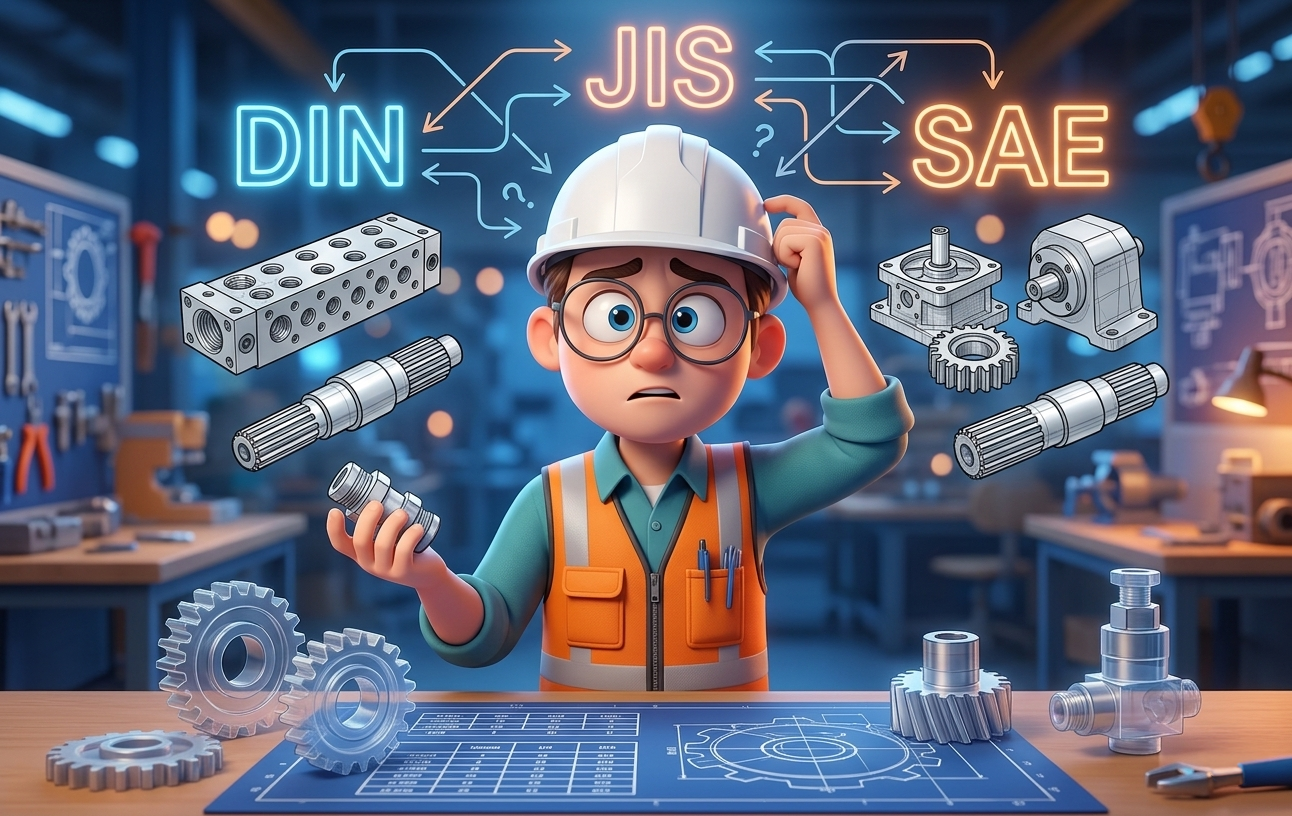
The customer’s existing equipment was not built to a single standard. Interface specifications were a mix of JIS and other regional standards — a common reality in equipment maintained and modified across multiple generations.
ZI’s manufacturing baseline is DIN. Rather than asking the customer to adapt entirely to ZI’s standard, the project took a hybrid approach: DIN-based specifications were retained where structurally compatible, while components where the standard mismatch would have caused direct interface problems were addressed individually.
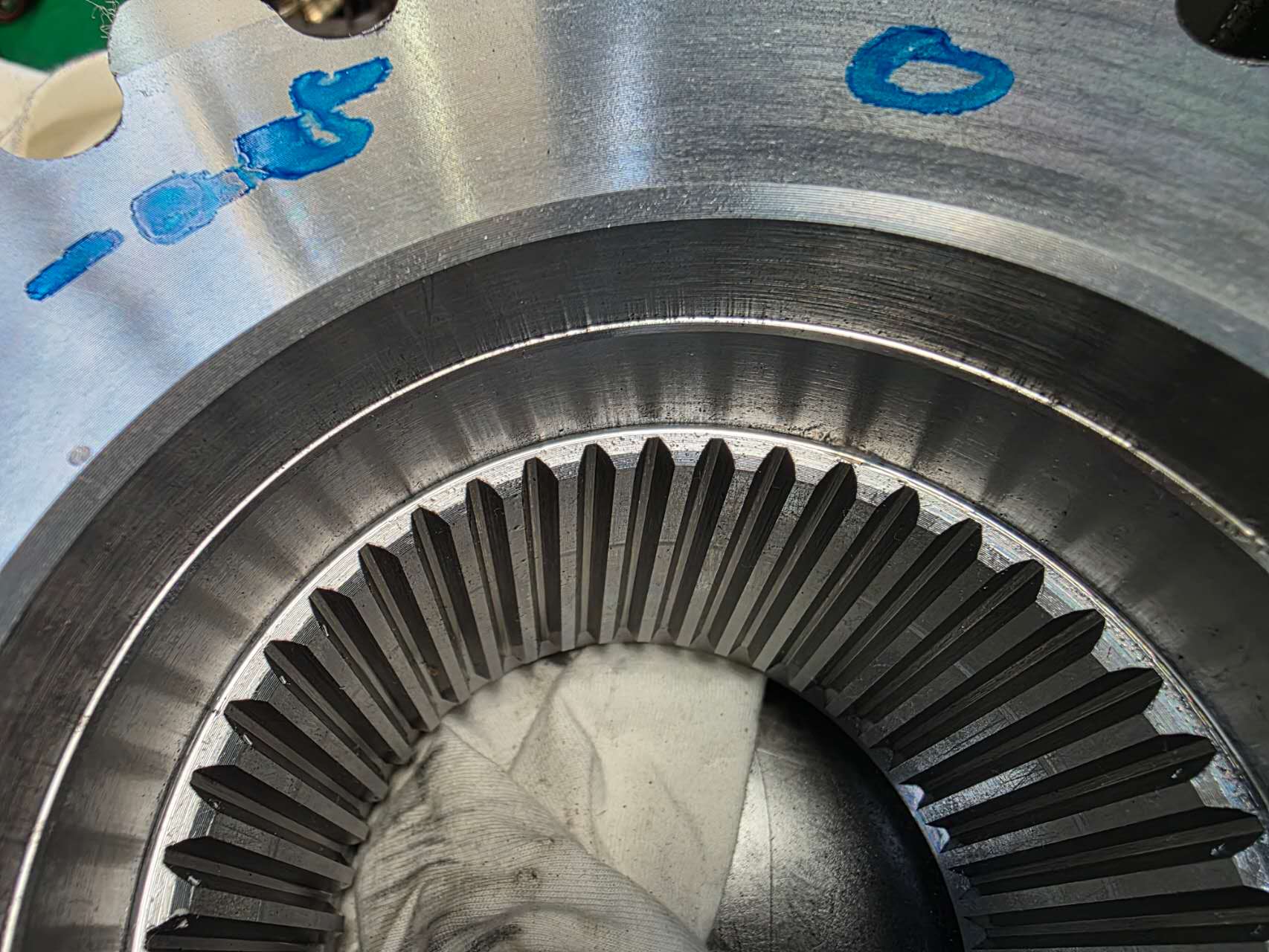
The pinion: the most significant case
Module, tooth count, and pressure angle all required adjustment to work within the customer’s existing drivetrain geometry. ZI worked with its supply chain to develop a new pinion specification from scratch — from design coordination through production and full quality inspection — rather than sourcing an off-the-shelf part that would have forced further changes elsewhere in the system.
Oil cup and pipe connection positions, hole patterns, and surface finish specifications were coordinated in the same spirit. Service part continuity was treated as a design requirement throughout — the goal was not a clean-sheet redesign, but a transition the customer’s field teams could manage without disruption.
Keep what works.
Change only what must change.
The complete swing drive assembly
ZI supplied the full swing drive assembly for this project — the ZCM series transmission, built and inspected end-to-end.
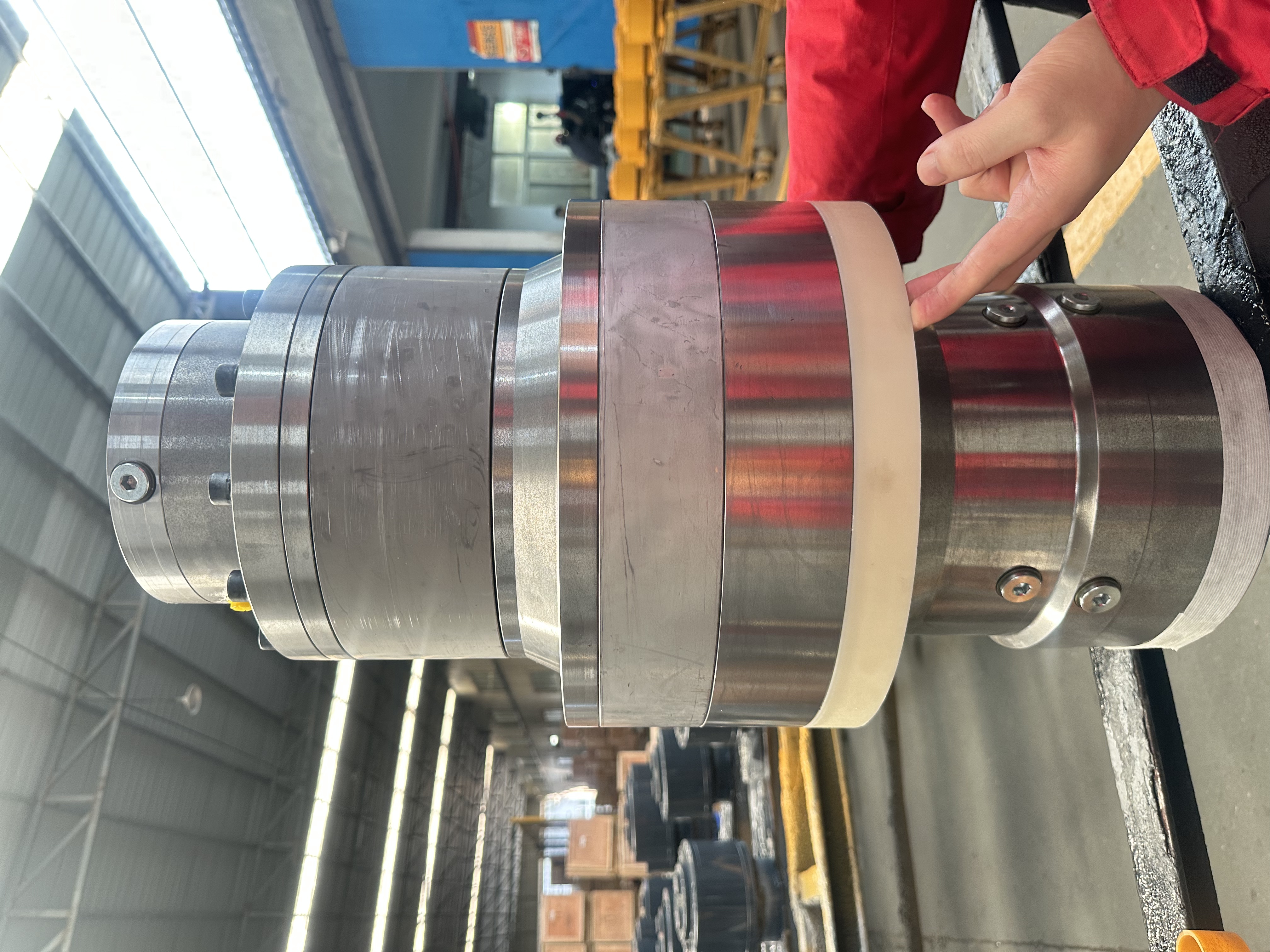
| Component | Scope |
|---|---|
| Planetary Gearbox | Three variants across boom-size classes |
| Orbital Motor | Direct-coupled to gearbox input |
| Pinion | Customer-spec, developed from scratch, with full QC |
| Oil Cup & Pipe | Interface-matched to the existing layout |
| ZCM series — supplied as one engineered transmission, not four loose parts. | |
From sample to batch production
Following sample delivery, commissioning, and forecast planning, regular batch orders are now in production. Service parts supply and field support are ongoing.
This is what system-level sourcing looks like in practice: not finding a replacement part, but designing a compatible system that performs better, installs cleanly, and supports the equipment through its full service life.
Facing a swing drive or
component transition?
Reply to this email, or send us the system you’re working with — we’ll come back with a compatibility assessment, not a product brochure. We read every response.
An introduction to a newly developed product from ZI — a closer look at the engineering behind it and the applications it was designed for.